

ABOUT US · SUSTAINABILITY
From the Earth, for the Earth
Sustainability is not a feature we added to a product line. It is the reason the company was founded , and it covers every stage: where the material comes from, how it is made, how it is packed and moved, how it performs in use, and where it honestly goes afterwards.
This page is deliberately specific. In a category where almost everything is described as eco-friendly, the useful information is which standard, which product, and how many days.
Three end-of-life routes, not one
A kitchen does not run on compostables alone. Some jobs need a container that gets washed and reused for years; some need foil that goes in an oven. We make all three kinds and we label each one for what it actually is.
Compostable
Recyclable
Reusable
And one route with no claim at all. Our foodservice cling film is PVC. It is not compostable, it is not kerbside recyclable, and it goes in general waste. We make it because every commercial kitchen needs film, and a supplier who refuses to sell it simply sends the customer elsewhere, along with the rest of their order. We would rather make it and label it honestly.
How we describe every material
Each of our sixteen lines is documented the same way, so you can compare like with like rather than reading marketing copy of varying enthusiasm.
Source & origin
Manufacturing & processing
Key benefits
End of life
Nine of the natural materials also have aninety-second film showing how they are made, from the raw material in nature through the press and into use.
What certification can and cannot tell you
Certification is necessary and it is not sufficient, and we would rather say so than pretend a logo settles everything.
What a mark does tell you
That an independent laboratory tested the product against a defined standard with a defined timeframe. BPI and ASTM D6400 or D8410 for compostability in North America.EN13432 for Europe. USDA Certified Biobased for the percentage of biobased carbon, and nothing else. It is not a compostability mark, and anyone telling you it is has misread their own certificate.
What it does not tell you
Whether a facility near your customer will actually accept it. A certified compostable product in a region with no composting infrastructure goes to landfill like everything else. That is not a failure of the certificate; it is the limit of what a certificate can do. Ask us what your market actually accepts and we will tell you, including when the answer rules out something we sell.
And a word we do not use. The Biodegradable Products Institute, the body that certifies compostables in North America, describes misleading “biodegradable” claims as greenwashing that obscures the truth. It carries no timeframe, it is restricted as a consumer claim in a number of US states, and we state compostable, with the standard and the number of days instead.
Beyond the product itself
The material was waste first
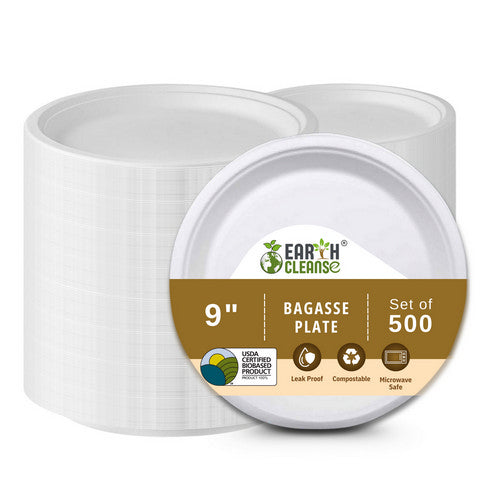
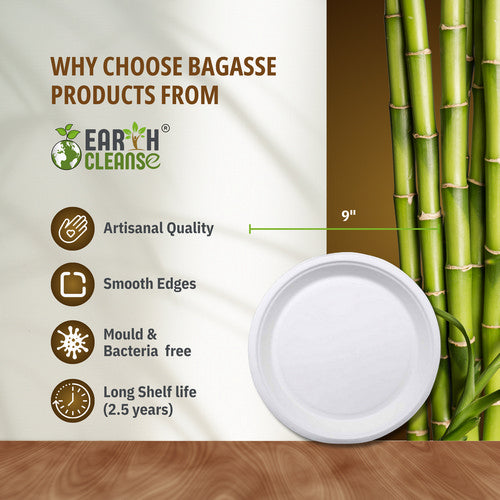
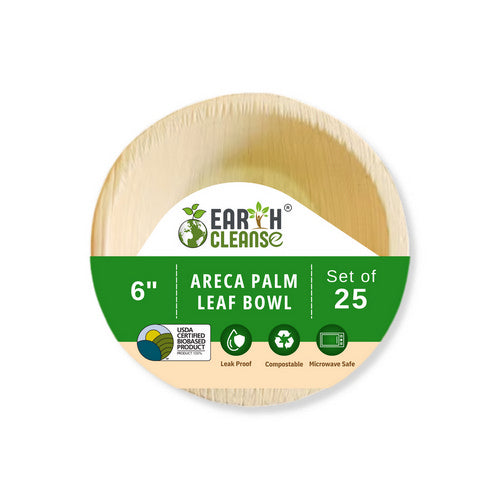
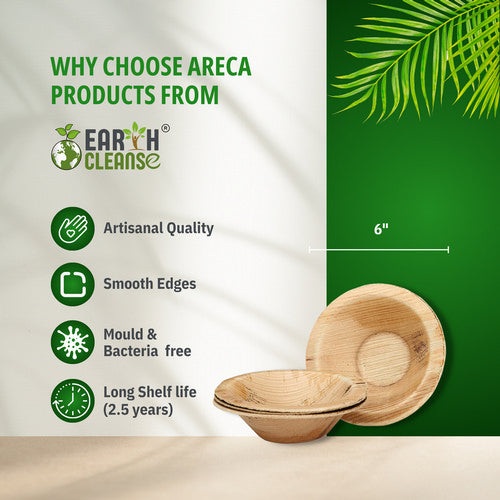
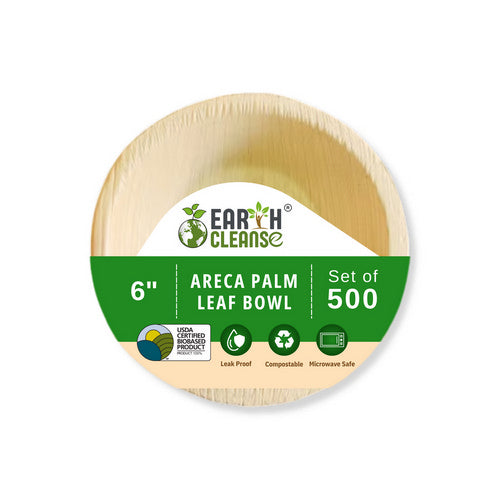
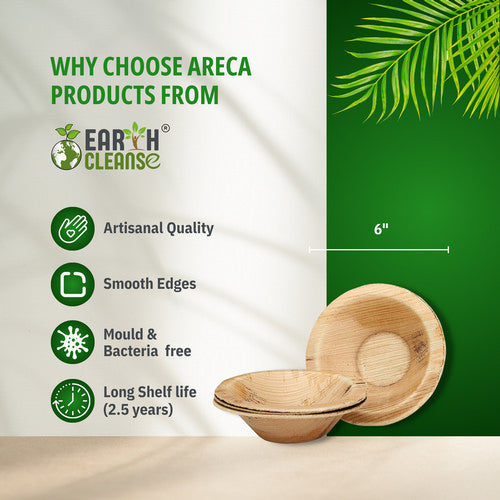
Areca sheath falls on its own. Cane fibre was burned at the mill, a real air-quality problem in cane regions. Rice husk is milling residue. Nothing is grown for us and no tree is cut for us.
60% solar, 80% less water
Most of our production runs on renewable energy, with the balance converting. Pressing a leaf uses a fraction of the water that moulding a polymer does.
Packaging that matches the product
On the compostable lines the covers, carry bags and pack linings compost too. There is little point in a compostable plate arriving wrapped in something that does not.
Shipped from the nearest warehouse
Every order routes from Hayward, Baltimore or the third-party site closest to you, reducing transit, less handling, lower emissions per case.
The lifecycle, in four steps
It falls
We make it
It returns

Our position on plastic
We sell recyclable plastics as well as compostables, and we will not pretend that is a contradiction. Plastic made food safe to transport, cut spoilage dramatically, and made hygiene affordable at scale. A palm-leaf plate is a beautiful thing, but it cannot seal a curry for a forty-minute delivery ride or be washed and refilled two hundred times.
The failure was never the chemistry. It was building a single-use culture around a material designed to last, and never building the system to collect it back. That is a systems failure, and it is fixable by reducing what we use, reusing what we can, and recycling properly what remains.
On every recyclable product page we show the compostable alternative beside it. The direction of travel matters as much as today's order.
Disposal, honestly
Home compostable
Industrially compostable
Recyclable

The five material families
Fifteen materials, grouped by where they come from and where they go. Four of these families compost. One recycles. We show them together because the honest version of sustainability is not one material doing everything; it is choosing the right one for the job, and being clear about which is which.

Leaf & Fibre
Areca palm, sal leaf, sugarcane bagasse, rice husk

Wood
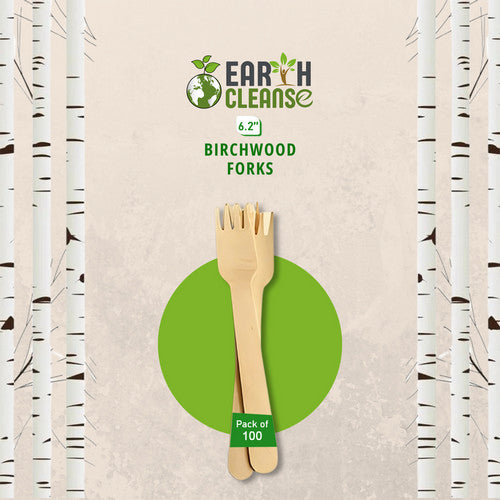
FSC birchwood, bamboo, balsa

Paper & Board
FSC and recycled fibre, HydraShield coating

Plant-Based
PLA and CPLA from fermented plant starch

Recyclable
PP, PET, PS, aluminium, HDPE and LDPE