

THE MATERIAL · PALM LEAF
The leaf that falls, and becomes a plate
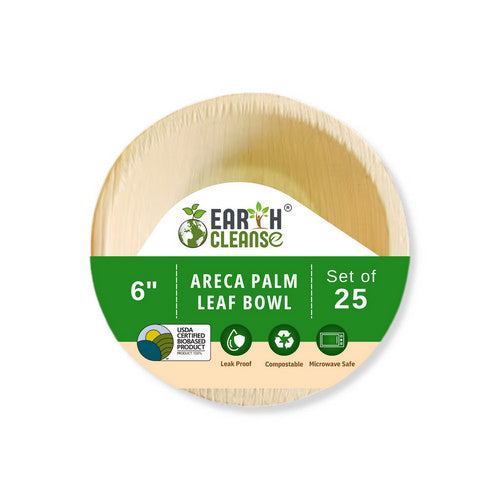
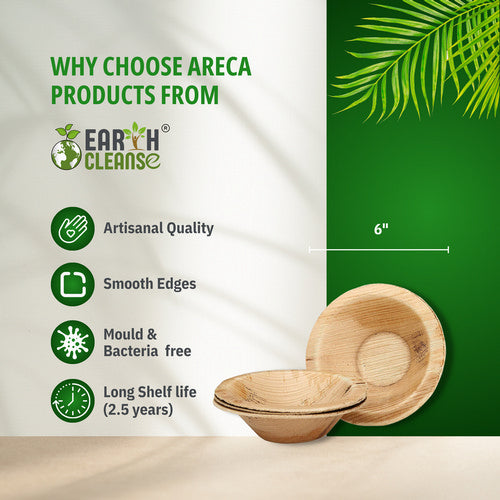
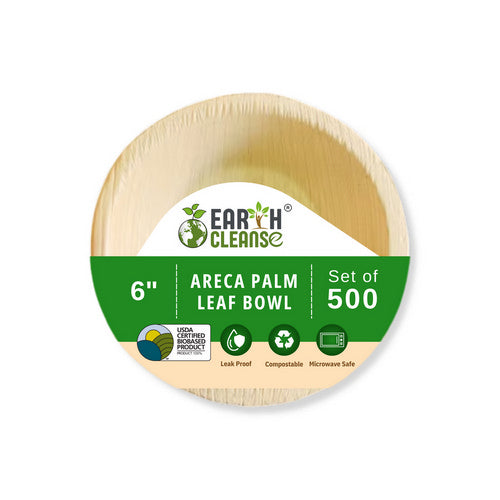
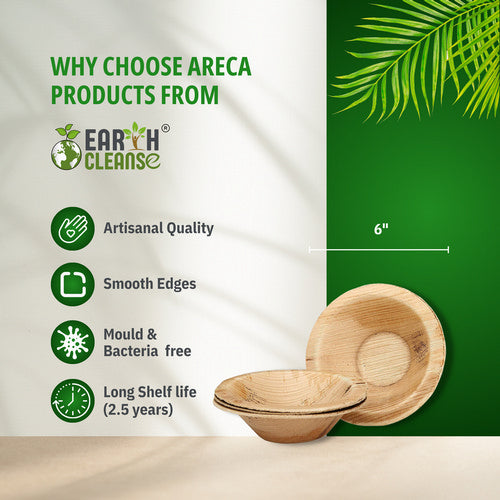
Areca palms shed their leaf sheaths naturally. We gather what nature lets go and press it into sturdy, beautiful, fully compostable tableware.
0
trees cut
0
chemicals used
weeks
to compost
340°F
microwave/oven safe

A by-product of nature, not of industry
The areca (betel) palm grows across South India. As it grows, it naturally sheds the broad sheath at the base of each leaf. For generations these fell to the forest floor and decomposed.
We collect them, providing income to farming families, and turn what was waste into something useful, beautiful and compostable. Nothing is cut down; nothing is chemically treated.

Heat is the only binder
Collected
Fallen sheaths are gathered by farmer micro-preneurs.
Washed
Cleaned with water only — no bleach, no solvents.
Heat-pressed
Pressed under heat into plates, bowls and trays.
Sterilised
A heat treatment makes each piece food-safe.
Quality-checked
Every piece inspected by hand for strength and finish.
Packed plastic-free
Packed in plastic-free materials, ready for your table.
Best applications
Where palm leaf shines

Weddings & events

Hotels & catering

Takeout & food trucks
Home dining
Watch: the palm leaf story
Two minutes, from the grove to your table, and back to the soil.

Material properties
End of life
How palm leaf returns to soil

Home compost

Industrial compost

Time & disposal


Questions
Palm leaf, answered
No. The palm sheds its leaf sheaths naturally; we only gather what has already fallen. No tree is cut, and the palm keeps growing.
None. The sheaths are washed with water, heat-pressed and heat-sterilised. No dyes, wax, chemicals or plastic at any stage.
Within weeks in most home composts (about 60–90 days depending on conditions), and faster in industrial facilities.
No, each carries its own natural grain and tone, so every piece is one-of-a-kind.
Explore more


